Ayodhya is an ancient city situated on the banks of the Sarayu river in Uttar Pradesh. Universally recognized in Hindu theology as the birthplace of Lord Rama, the city operates as one of the most critical pilgrimage destinations on the Indian subcontinent.
Ayodhya
The Ancient Capital of the Kosala Kingdom

History
Mythological Heritage
According to the epic Ramayana, Ayodhya was established by Manu, the progenitor of mankind, and served as the capital of the Ikshvaku dynasty. It is revered as the geographical stage where the physical incarnation of Lord Rama took place.
Historical Complexities
The city has navigated profound historical and political complexities, particularly concerning the Ram Janmabhoomi site. It historically housed an array of temples, Buddhist stupas, and Jain shrines, reflecting a diverse religious tapestry through ancient and medieval periods.
Modern Resurgence
Following decades of legal disputes, the Supreme Court of India rendered a definitive verdict in 2019, paving the way for the construction of a massive new Hindu temple at the disputed site. This has triggered a massive, ongoing infrastructural overhaul of the entire city.
Significance
Ayodhya forms the core of Vaishnavite devotion in India. The recent inaugurations have rapidly converted the city into a hyper-developed global religious center, symbolizing a modern cultural renaissance in North Indian Hindu tradition.
Festivals
Deepotsav (Diwali)
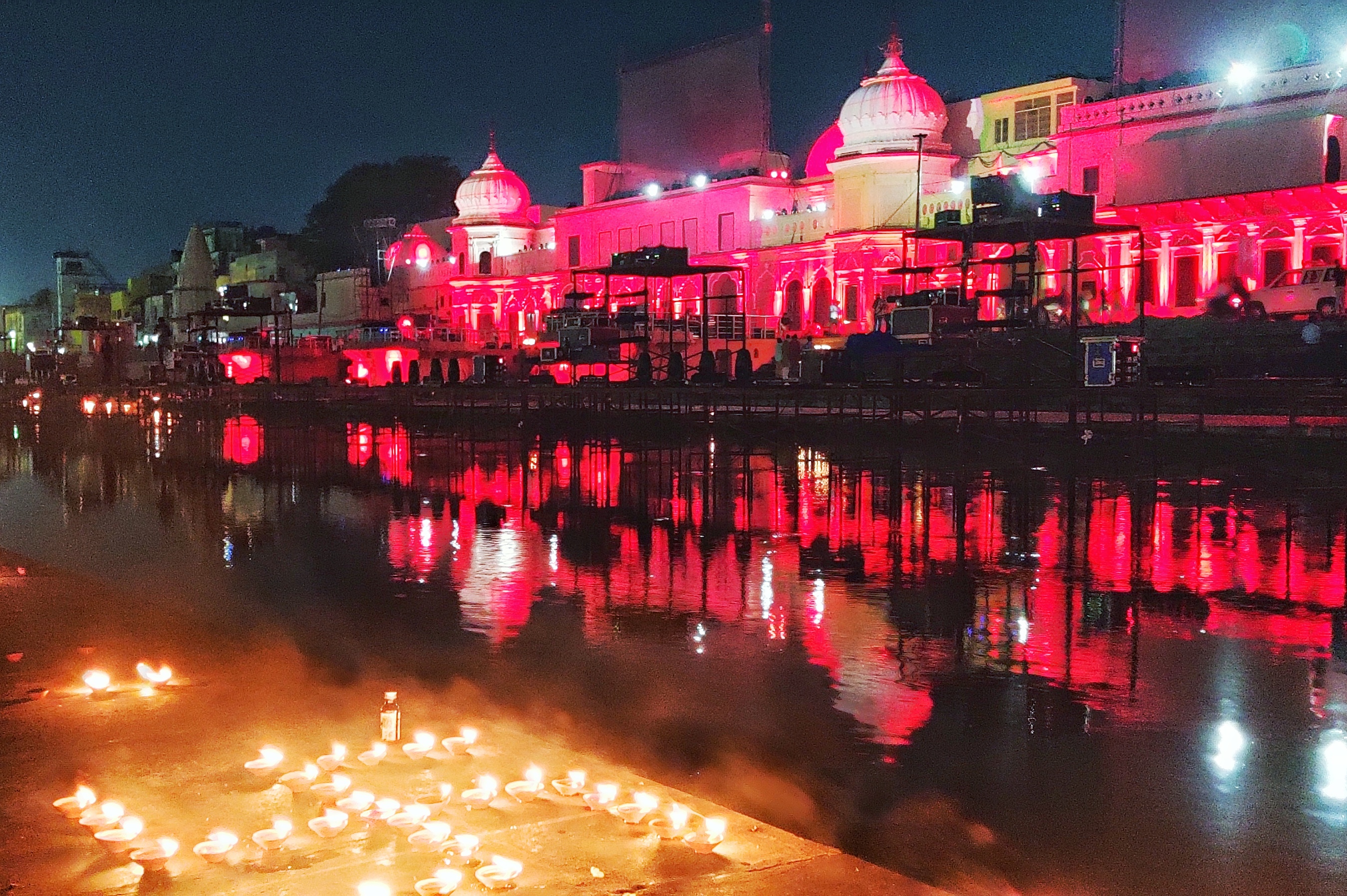
The city's preeminent festival commemorates Rama's return from a 14-year exile. Government-sponsored celebrations feature the lighting of millions of diyas (oil lamps) along the Sarayu river embankments (Ram ki Paidi), frequently setting Guinness World Records.
Ram Navami
A major spring festival celebrating the specific birth date of Lord Rama. Devotees take holy dips in the Sarayu river before visiting the primary shrines, accompanied by massive chariot processions and continuous recitations of the Ramcharitmanas.
Special Highlight
The city riverfront, Ram ki Paidi, has been completely transformed with illuminated steps and synchronized lighting along the Sarayu river.
Travel Guide to Ayodhya
How to Reach
By Air: The newly inaugurated Maharishi Valmiki International Airport provides direct nationwide connectivity.
By Train: The massive, newly rebuilt Ayodhya Dham Junction connects seamlessly to major rail networks.
By Road: Located directly on National Highway 27, enabling rapid transit from Lucknow (135 km).
Best Time to Visit
September to March avoids the severe summer heat, allowing for extensive temple hopping.
Local Attractions
Ram Janmabhoomi Temple: The newly constructed primary mandir built entirely of pink sandstone.
Hanuman Garhi: A massive 10th-century templar fortress dedicated to Lord Hanuman.
Kanak Bhawan: A lavishly decorated temple historically gifted to Sita by Kaikeyi.
Travel Tips
Be prepared for intense, multi-tiered security checks before entering the main Ram Temple complex.
Only utilize the officially designated locker rooms near the entry points for your electronics.
Vast stretches of the inner city are now pedestrian-only; utilize the electric golf carts.
Dress conservatively; shorts and sleeveless tops may prevent entry into certain historical shrines.
Location Map
Image Gallery