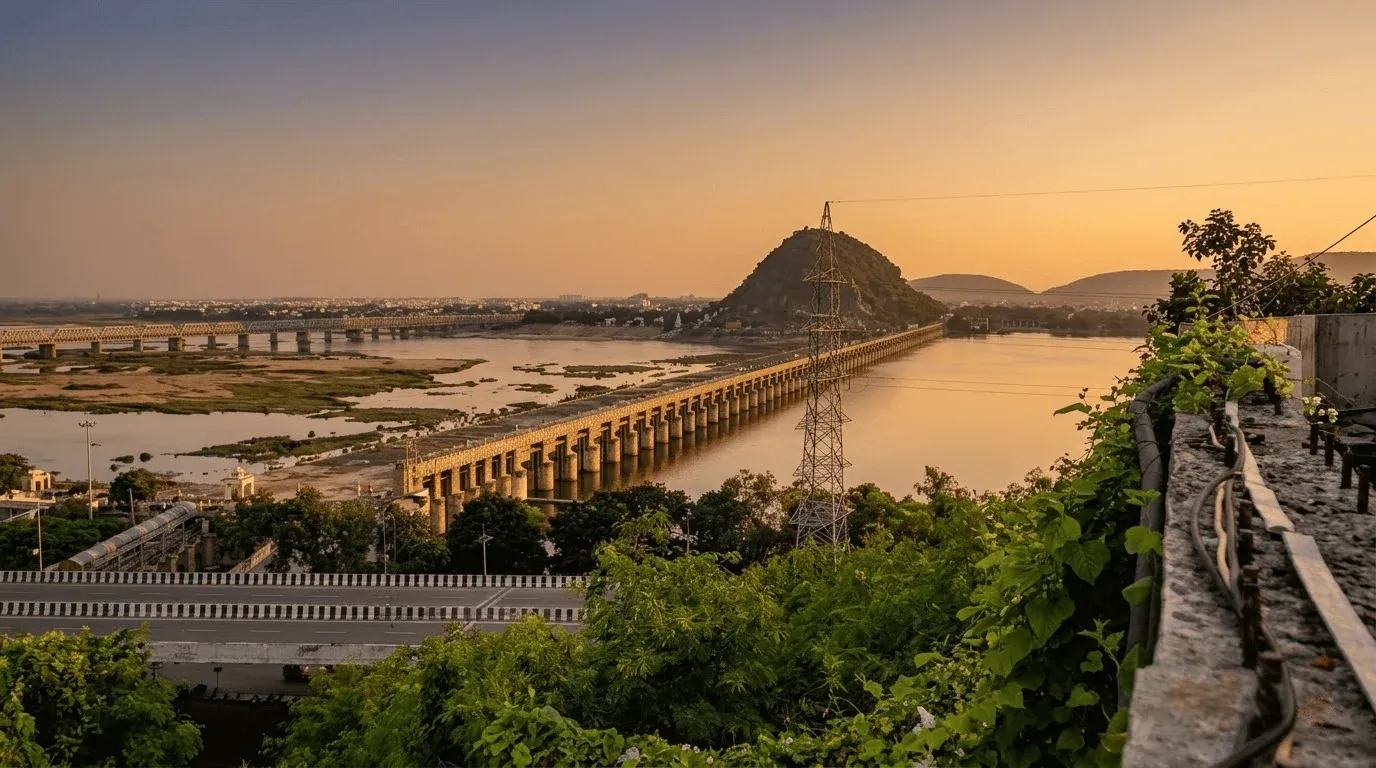
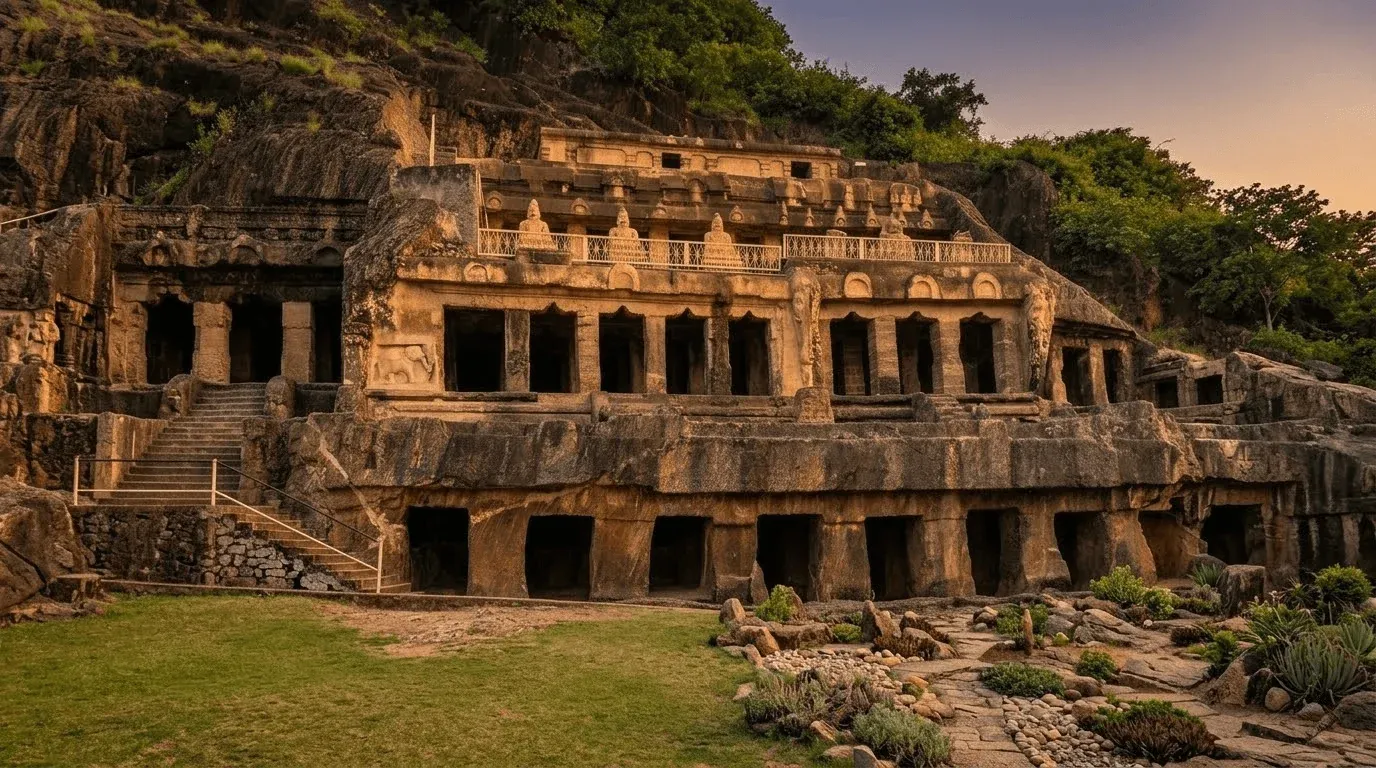
As the de facto capital of Andhra Pradesh, Amaravati stands as a magnificent testament to India's rich Buddhist heritage and ancient architectural brilliance. This historic city, located on the banks of the Krishna River, was once the capital of the Satavahana dynasty and flourished as a major Buddhist center from the 2nd century BCE to the 3rd century CE. Today, Amaravati serves as the administrative capital of Andhra Pradesh while preserving its glorious past through world-class museums, magnificent stupas, and archaeological treasures that offer visitors an extraordinary journey through India's ancient Buddhist civilization and cultural evolution.
Amaravati
Ancient Buddhist Heritage Capital
A Glimpse into the History of Amaravati
Ancient Satavahana Capital
The history of Amaravati dates back to the 2nd century BCE when it served as the capital of the powerful Satavahana dynasty. According to legends, Gautama Buddha gave sermons at Dharanikota, making this region spiritually significant. The city flourished as a major Buddhist center with magnificent stupas and monasteries that attracted scholars and pilgrims from across Asia.
Golden Age of Buddhism
From the 2nd century BCE to the 3rd century CE, Amaravati reached its zenith under Satavahana rule. The city was home to the great Buddhist Acharya Nagarjuna, whose profound teachings influenced Buddhist philosophy across Asia. The period saw the construction of magnificent stupas and viharas that showcased exceptional architectural skill.
Modern Capital Development
After centuries of decline, Amaravati was chosen as the capital of the newly formed Andhra Pradesh in 2017. The city has been meticulously planned with modern infrastructure while preserving its ancient heritage. The transformation includes world-class museums, archaeological parks, and cultural centers that bridge the gap between ancient glory and contemporary development.
Cultural Significance
Amaravati holds profound cultural significance as one of India's most important Buddhist heritage sites. The city is home to the magnificent Mahachaitya Mahastupa, one of the largest free-standing stupas in India, which showcases the architectural brilliance of ancient Indian craftsmen. The region's association with Lord Buddha and various Buddhist saints makes it a sacred pilgrimage destination for millions of followers. The Amaravati Museum Complex houses invaluable artifacts, inscriptions, and sculptures that provide deep insights into Buddhist art, philosophy, and daily life from ancient times. The city's role as a center of learning and spiritual discourse continues to attract scholars and spiritual seekers from around the world.
Major Festivals at Amaravati
Buddha Purnima
The Buddha Purnima festival, celebrating the enlightenment of Gautama Buddha, is observed with great devotion at Amaravati. Thousands of devotees gather at the Mahastupa to offer prayers and participate in religious ceremonies that include meditation, discourses on Buddhist teachings, and cultural programs showcasing traditional music and dance.
Dhamma Chakravarti Celebrations
The Dhamma Chakravarti festival, commemorating the turning of the Dhamma wheel by Buddha, features elaborate ceremonies at various Buddhist sites in Amaravati. The festival includes special prayers, cultural performances, and community feasts that highlight the rich Buddhist traditions and philosophical heritage of the region.
Special Highlight: Mahachaitya Mahastupa
The Mahachaitya Mahastupa stands as Amaravati's crown jewel and one of India's most impressive Buddhist monuments. This magnificent stupa, built with intricate carvings and architectural brilliance, reaches a height of 35 meters and features unique design elements that reflect advanced engineering skills of ancient India. The stupa is adorned with beautifully carved panels depicting scenes from Buddha's life and Jataka tales. The surrounding archaeological museum houses rare artifacts, ancient inscriptions, and Buddhist relics that date back over two millennia. The entire complex serves as a living museum where visitors can experience the grandeur of ancient Buddhist civilization while learning about India's profound spiritual and philosophical heritage.
Travel Guide to Amaravati
How to Reach Amaravati
By Air: The nearest airport is Vijayawada Airport, approximately 80 km from Amaravati. Hyderabad International Airport is about 270 km away with better connectivity to major cities.
By Train: Amaravati has its own railway station with regular trains connecting to major cities like Vijayawada, Guntur, and Hyderabad. The station is well-equipped with modern facilities.
By Road: Excellent road connectivity from Hyderabad (270 km), Vijayawada (80 km), and Guntur (50 km). APSRTC operates regular bus services, and private taxis are readily available.
Best Time to Visit
The ideal time to visit is from October to March when the weather is pleasant and suitable for sightseeing. The winter months offer comfortable temperatures for exploring outdoor attractions, while the post-monsoon season brings lush greenery to the surroundings.
Local Attractions
Mahachaitya Mahastupa: Magnificent stupa with archaeological museum.
Amaravati Museum: World-class collection of Buddhist artifacts.
Dhyana Buddha Statue: Tallest statue of Buddha in meditation pose.
Tips for Visitors and Travelers
Wear modest clothing when visiting religious sites and carry a hat for sun protection.
Photography is allowed in most areas but check for restrictions at religious sites.
Carry sufficient water as the weather can be warm, especially during summer months.
Respect the religious customs and maintain silence in meditation areas and stupas.
City Location
Image Gallery