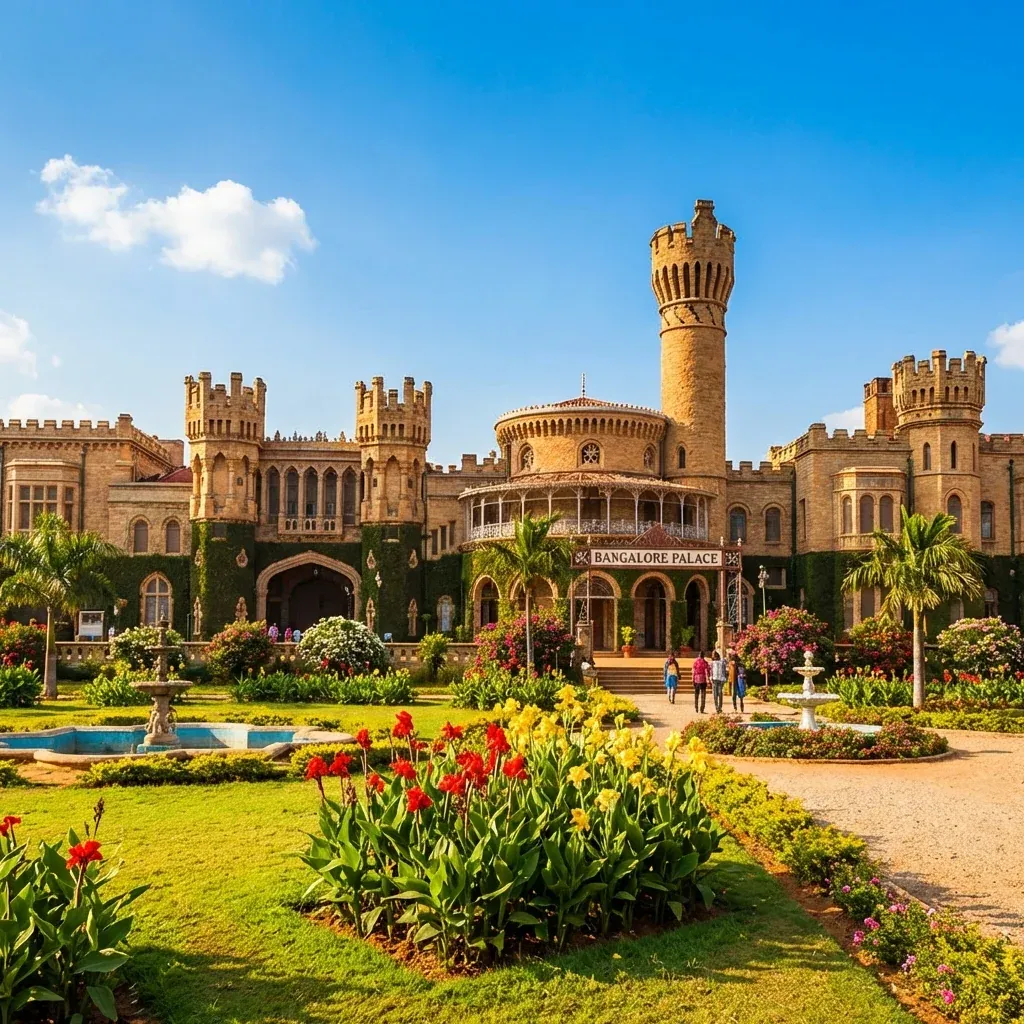
Set securely in Vijayanagara District, Karnataka, Hampi is a mesmerizing UNESCO World Heritage Site. Covering 40 sq.km along the Tungabhadra River, it showcases mind-bending boulder landscapes, exquisite carved monolithic structures, and intricate temple ruins.
Hampi
The Magnificent Capital of the Formidable Vijayanagara Empire
A Glimpse into History
Origins – Harihara and Bukka (1336 CE)
Founded by brothers Harihara and Bukka, Vijayanagara swiftly evolved to resist invasions. Hampi was logically established amidst rugged, naturally defensive granite hills blocking enemy cavalries effectively.
Evolution – The Golden Era of Krishnadevaraya
Under King Krishnadevaraya, the empire achieved its cultural zenith. Trade boomed rapidly and Portuguese travelers documented Hampi as parallel in size and wealth to ancient Rome.
Rediscovery – The Fall and Revival
After the crippling Battle of Talikota (1565), invading armies systematically burned Hampi for months. Abandoned entirely, British archaeologist Colin Mackenzie eventually surveyed and unveiled its ruins to the world in 1800.
Significance
Hampi's outstanding Dravidian architecture includes the iconic Stone Chariot, the musical pillars of Vittala Temple, and the immense Ugra Narasimha monolith. It brilliantly embodies the peak of classical Indian engineering and urban planning heavily protected by defensive riverine and rocky barriers.
Festivals & Events
Hampi Utsav (November)
The state government organizes this spectacular 3-day cultural festival precisely within the ruins. Beautiful lights illuminate the archaic structures complementing huge classical dance sequences.
Purandaradasa Aradhana (January/February)
A classical music festival honoring Purandaradasa, the esteemed father of Carnatic music. Talented artists from across India consistently gather at his ruined mantapa near the river.
Did You Know?
The remarkably crafted Stone Chariot in the Vittala Temple complex is not monolithic; it was cleverly built using separate giant stone blocks with concealed joints mimicking continuous sculpting entirely.
Travel Guide
How to Reach
By Air: Jindal Vijaynagar Airport (VDY) is ~35 km away; Hubballi (HBX) is 160 km.
By Train: Hosapete Junction (HPT) is extremely close (~13 km), linking major cities effectively.
By Road: Smooth highways connect Bengaluru (~340 km) with prompt overnight sleeper buses available.
Best Time to Visit
October to February dictates the peak season with cool weather easing extensive outdoor exploration. The summer months (April–June) remain scorchingly hot hitting 40°C making daytime tours difficult.
Local Attractions
Virupaksha Temple (<1 km): Ancient, functioning temple dedicated to Lord Shiva.
Vittala Temple (~2 km): Ground zero for the famed Stone Chariot and musical pillars.
Lotus Mahal (~3 km): Beautiful blending of Hindu and Islamic arch styles.
Tips for Visitors
Rent a bicycle or moped locally to freely traverse the large distances between sprawling monument clusters.
Carry excessive water resources, hats, and sunscreen; shading remains sparse amidst the open boulder valleys.
Secure sunset vantage spots at Matanga Hill slightly early; the sweeping landscape views are heavily prized.
Sturdy grip shoes are strictly necessary; exploring temples demands rigorous climbing across slippery bare rocks.
Location Map
Image Gallery